European footwear and leather machinery manufacturers are operating in an increasingly challenging environment. At a VDMA press conference during Simac Tanning Tech in Milan, industry representatives discussed the impact of Chinese competition, restrained investment, regulation and demographic change – but also highlighted opportunities arising from automation, digitalisation and new markets.
Recent VDMA figures provide some positive signals. Across the technology segments represented by the association, sales increased by around 5%, while incoming orders rose by approximately 14%. However, investment conditions remain difficult. Global conflicts, tariffs, energy costs and regulation are influencing purchasing decisions, while customers increasingly require machinery capable of handling smaller batches and greater product variety.
One of the biggest changes is the growing technological strength of Chinese machinery manufacturers. Competition from China is no longer based primarily on price: suppliers have developed their technological expertise and benefit from large domestic production volumes and well-established supply chains. European companies therefore need to differentiate themselves through technology, flexibility, quality and service.
Automation is expected to play an important role. According to the study presented at the event, around 40% of production processes could potentially be automated. Fully automated footwear factories, however, remain unlikely in the foreseeable future due to the flexible materials, numerous production steps and extensive manual handling involved in shoe manufacturing.
Instead, the focus is shifting towards automating individual processes where there is a clear economic benefit. This is particularly relevant in Europe, where high labour costs and a shortage of workers for physically demanding and repetitive tasks are increasing the pressure to automate.
Digital technologies could provide further opportunities. AI-supported machine vision, remote programming, machine monitoring and the analysis of production data could help manufacturers optimise processes and reduce downtime. For machinery suppliers, such technologies also open the door to new business models based on services and recurring revenues. Service business has already proved comparatively resilient during periods of weaker demand for new machinery.
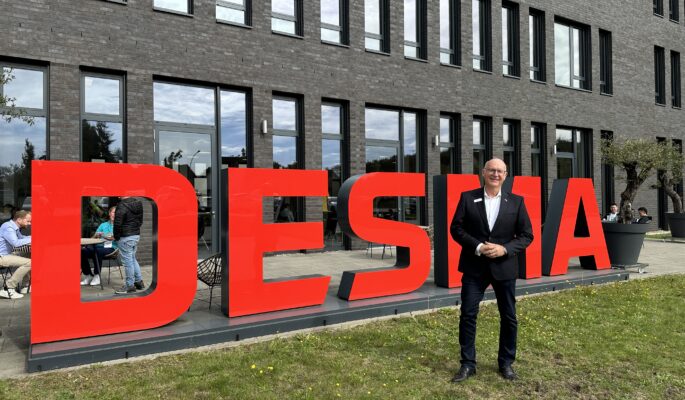
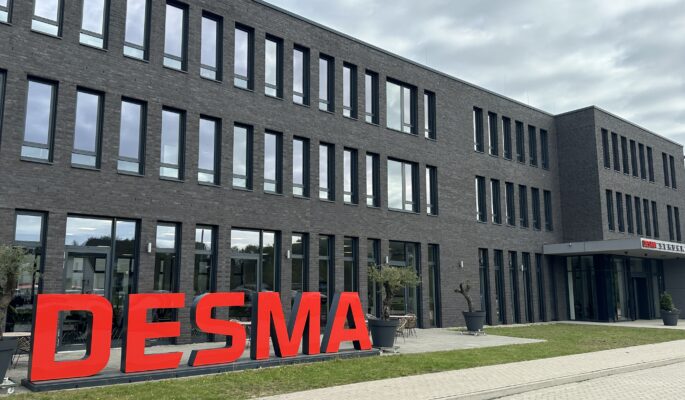
Desma provided an example of how manufacturers are responding to these changes. Rather than competing primarily on machine price, the German footwear machinery specialist is focusing on solutions that offer customers measurable economic benefits. Cooperation with material suppliers is becoming increasingly important, as the performance of a production system depends on the interaction between machinery, materials and processes.
Nearshoring was another topic discussed in Milan. A large-scale return of footwear manufacturing from Asia to Europe is considered unlikely, but there may be opportunities in selected markets and applications. Portugal remains an important European production location, while Morocco and Tunisia could benefit from manufacturing moving closer to European consumer markets. Specialised segments such as workwear, protective products and technical applications could also create additional opportunities.
At the same time, many European machinery manufacturers face challenges closer to home. The sector is dominated by small and medium-sized companies, some of which need to address succession as the current generation of owners approaches retirement. Stronger cooperation and industry networks could therefore become increasingly important, both for entering international markets and for developing new applications.
Regulation is another concern, particularly for SMEs with limited administrative resources. Requirements relating to sustainability, circularity, supply chains and digital product information are increasing. While these rules can support industrial transformation, industry representatives stressed that their implementation must remain manageable for smaller companies.
The discussion in Milan pointed towards a broader transformation of the machinery business. The physical machine remains at its core, but software, data, services and process expertise are becoming increasingly important. Rather than simply supplying equipment, European manufacturers may therefore need to position themselves more strongly as partners capable of developing integrated production solutions.
In an increasingly competitive global market, this could become a crucial differentiator: not simply building better machines, but helping customers manufacture more efficiently, flexibly and competitively.
More details of the report will be published in the coming issue of STT.