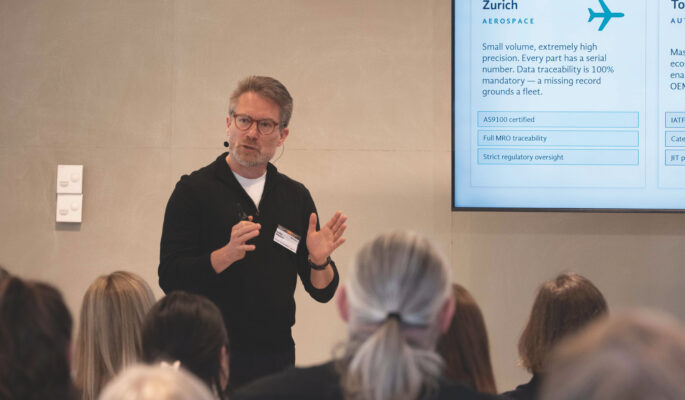
Still, Andrezak was careful not to reduce resilience to attitude alone. Mindset matters, but it is not enough. If companies want to become more adaptive, they need concrete routines that support that ambition. One of his most practical recommendations concerned management itself: leadership teams need far more frequent and far more honest discussions than many organisations currently allow. “The most important thing in a company is clarity,” he said. “And clarity comes from friction.”
That friction, in his view, is not a sign of dysfunction. It is a sign that real issues are being surfaced before they turn into operational confusion further down the organisation. Decisions need to be made clearly, communicated clearly and revisited quickly when conditions change. He also advocated what he called “planned irritation”: deliberately introducing scenarios, questions and thought experiments before a crisis forces them onto the agenda. In other words, organizations should not wait for disruption to test their assumptions. They should practise for instability while conditions are still manageable.
As important is a bias towards action. Many leadership teams spend months discussing pilots, frameworks and timing, when the better option would be to start, learn and adjust. “We often say we need a pilot project and then spend months discussing what the perfect project would be,” Andrezak observed. “But often there is no real risk in just starting.”